Watch the Plenary from the STCaucus Conference
A very special thanks to our own Maurizio Milana and Mallack Walsh who helped run the technical end of things…

A very special thanks to our own Maurizio Milana and Mallack Walsh who helped run the technical end of things…
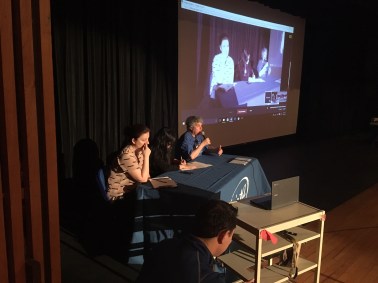
On January 9th, more than 140 people turned out on Long Island for the Restoring Power to the Teacher Conference hosted by STCaucus. The conference focused on ways to organize and empower teachers so that they can not only fight for the schools our students deserve, but for the democratic unions that we deserve!
The morning began with a panel discussion featuring four activist women:
Among the common themes of the discussion were union democracy and organizing at the rank and file level.
Following the plenary, attendees broke up into different workshops. During the first workshop, Melissa McMullan of the Port Jefferson Station Teachers Association and Patricia Alberti of the Rocky Point Teachers Association facilitated a workshop titled Finding Your Voice: Supporting Children’s Rights to Fair and Accurate Standards and Assessments and Protecting Our Profession, in which they discussed the state of public education and how teachers could have their voices heard. Samantha Winslow of Labor Notes facilitated The Caucus as a Vehicle for Positive Change in Our Union, which centered on where our power comes from (the membership) and how a caucus can help harness that power. Ms. Winslow tied STCaucus’ work to what successful rank and file caucuses in places such as Chicago, Massachusetts, Seattle, and other places across the country have accomplished. Jia Lee’s Teachers of Conscience- Teachers Refusing to comply and Opting Out workshop dealt with the courageous steps some teachers are taking in refusing to administer New York State assessemnts to their students. Finally, Katie Kleinpeter of the PJSTA facilitated a “best practices” styled workshop titled Organizing at the Local Level.
The second round of workshops saw four more sessions for attendees to visit. Geri-Ann McNamee of the PJSTA and Tracy Zamek of the Hauppauge Teachers Association facilitated a workshop titled Creating Change Through Local School Boards. Both women are school board members in their home communities and, in one of the most promising developments of the day, at least one attendee to the workshop now appears intent on running for the board in her home district as well. The Young Teachers Collective, who traveled all the way from New Jersey to be a part of the conference, facilitated the workshop The Personal, The Professional, and The Pedagogical: Organizing for New and Pre-service Teachers. Their dedication to the profession that they are only now beginning is admirable. They clearly are a bright part of the teaching profession going forward. Ms. Winslow ran her second workshop of the day, The Friedrichs Case and Organizing in Right to Work States, dealing with the looming Supreme Court case and what it means for us. Finally, I worked with Norm Scott from the UFT’s MORE Caucus to facilitate a workshop titled Unity Caucus: Thirst for Power and the Undemocratic Nature of Our Unions. They helped to inform attendees to the workshop on how a small group of people within UFT leadership manages to control nearly every level of teacher unionism we have all while shutting out any opposing viewpoints.
The day was a remarkable success as it brought passionate teachers from all parts of the state together to learn from each other and to network as to how we move forward as a caucus. It was exciting, for a change, to see an event planned and carried out entirely by rank and file teachers, with the intent of having their voices shape the union, as opposed to the top down nature of NYSUT that we have all come to know. The success of the event makes it increasingly likely that similar events around the state can be planned.
You may also want to check out UFT member James Eterno’s blog post on the event.
Here is Norm Scott’s post.
“There are teacher evaluations that are in the report and they are connected to tests, either state tests or locally approved tests,” Cuomo said on Sunday in Syracuse.
I have to thank my friend Norm Scott over at Ed Notes Online for the piece he recently wrote on the demise of the UFT’s blog Edwize. I’ll admit that I had never even heard of Edwize. But then again I don’t typically spend time reading Unity Caucus propaganda, so maybe that explains it.
Anyways, tucked into Norm’s piece was a real gem that he had from Mike Antonucci’s Intercepts blog…
Back in 2002, three NEA staffers wrote an article for the Journal of Labor Research on the union’s experiments in cyberspace. They concluded, “With modern cyber software, in short, content creation can be decentralized and democratized. Members can be empowered. But first, of course, members need to be trusted. A top-down union, comfortable with command-and-control internal information-sharing processes, might be unnerved by this prospect. A top-down union, uncomfortable with anything but command-and-control, will likely never succeed in cyberspace.”
At the time, I felt this was an encouraging view, but didn’t go far enough.
Sigh. All NEA can think about is how cyberspace will help it get members to do something. Completely unexamined (perhaps even unimagined) is what if cyberspace helps members to get NEA to do something? What if members share internal information not previously filtered through the communications staff? What if they decide to support or reject legislation not included in the union’s legislative program? What if they become unhappy meeting once a year in a group of 9,000 and would prefer a different arrangement? A membership truly engaged in NEA’s workings might make it a stronger union, but it would be a fundamentally different union from the one that exists now, and in ways utterly unpredictable to those who hope to harness that power.
Even 13 years later we haven’t reached that point, but we’re closer to it than we have ever been.
That passage gets to the heart of what I think is the biggest problem with our unions and that is the top down nature of them in which our leaders insist on. “Command-and-control” as Antonucci calls it. For as long as I have been a teacher (14 years) I have seen the leadership of NYSUT/AFT/NEA decide on what we are supporting, what positions to take, what needs to be done and then simply command the membership to pledge support to those positions. To some extent this also happens in individual locals, though I think that is less the case in smaller locals. Like most people in power, union leaders often act with their own best interests in mind, with the goal being to retain power over all else.
The decentralizing and democratizing of unions that those NEA staffers saw as a possibility in 2002 has started to take place in many unions across the country, only it hasn’t been with the consent of the union leadership, but more as a thorn in the leadership’s side. Rank and file members are found utilizing social media to organize everyday in support of causes that their unions haven’t supported. Opt-out campaigns are the perfect example of this. Classroom teachers were organizing around that long before NYSUT did. It’s why every day classroom teachers like Beth Dimino, Jia Lee, Kevin Glynn, and dozens of others are viewed as the real teacher leaders while the likes of Andy Pallotta, Mike Mulgrew, and Randi Weingarten are looked upon with disdain.
In 2014, when NYSUT refused to oppose Governor Cuomo, the PJSTA harnessed the power of social media to endorse and support his primary challenger Zephyr Teachout. Teachout was a guest at the PJSTA Conference Day and held a press conference at Comsewogue High School with hundreds of our members at her backs. We recorded her speech and spread it via YouTube so that teachers across the state could hear her pro-public education stance, giving her a chance to illustrate just how different she was than the incumbent Cuomo. While falling short, Teachout reached nearly 35% of the primary voters and left us wondering what would have happened if our parent unions had worked for her in the ways that we had.
In other places around the country caucuses favoring a more democratic brand of unionism have either won control of their unions (Chicago, LA) or are mounting serious challenges (Philadelphia). Of course right here in New York, the MORE Caucus is mounting a growing threat to Unity Caucus at the UFT level and STCaucus is becoming a force to be reckoned with inside of NYSUT.
One thing that I have often claimed and believe deeply is that union leadership of UFT/NYSUT/AFT value power above all else and will stop at nothing to retain that power. This is even more noticeable with the Friedrichs threat looming. At a time when unions should be doing more than ever to empower their members and allow the voice of the rank and file to drive their agendas, our leadership’s strategy has been to ask for more VOTE-COPE money all while attacking classroom teachers, issuing and early endorsement for former WalMart board member Hillary Clinton, cavort with our enemies in support of #TeachStrong, and celebrate “momentous” victories that aren’t actual victories.
There is a member driven movement for a more democratic union that is coming. How much it transforms our union remains to be seen, but the more rank and file teachers get informed, become engaged, and take back their unions the better off our profession, our students, and our communities will be.
If you haven’t already registered for the “Restoring Power to the Teacher” conference hosted by STCaucus do so right now! Be sure to bring a friend you work with or one from another district. this is your opportunity to have your voice heard and move your union in the direction you want it to go!
Governor Cuomo’s Common Core Task Force released their recommendations Thursday and, at first glance, they were better than I was expecting. There was a lot to like on the surface, so let’s take a look at the highlights from the governor’s press release…
To ensure that the State moves forward with high quality education standards the Task Force made 21 recommendations including:
- Overhauling the Common Core and adopting locally-driven high quality New York education standards with input from local districts, educators, and parents through a transparent and open process that are age-appropriate and allow educators flexibility for Students with Disabilities and English Language Learners.
- Establishing a transparent and open process by which New York standards are periodically reviewed by educators and content area experts, since educators know their schools and students best.
- Providing educators and local school districts with the flexibility to develop and tailor curriculum to meet the needs of their individual students and requiring the State to create and release new and improved curriculum resources that educators can then adapt to meet the needs of their individual students.
- Engaging New York educators, not a private corporation, to drive the review and creation of State standards-aligned tests in an open and transparent manner.
- Minimizing student testing anxiety by reducing the number of test days and test questions and providing ongoing test transparency to parents, teachers and districts on test questions and student test scores.
- Ensuring that State tests account for different types of learners, including Students with Disabilities and English Language Learners.
Additionally a four-year moratorium was placed using on Common Core state tests to evaluate teachers. Predictably, NYSUT leadership and their Unity Caucus mouthpieces ran around proclaiming this to be a “momentous” victory.
The problem, however, is that this was not a momentous victory. Nor was it close to being one. These were, possibly, small steps in the right direction which will ultimately mean nothing if they are not followed up with much larger gains. Here are my primary concerns…
While there are a few nice steps in here, that ultimately may be nothing more than nice language, there really is not much to be excited over. To me this simply seems to be an effort to quell the growing opt-out movement, get kids taking the tests in large numbers again, and then have the ability, without needing any legislative changes, to implement the rigged APPR system that has been thwarted by the opt-out movement. Enjoy whatever sense of “victory” this may give you, but proceed with caution and continue to opt-out of state testing!
Finally, be sure to give Peter Greene’s write up of this situation, “NY: Cuomo’s Common Core Nothing Sundae” a good read over at the Curmudgucation blog.


 | UFT Executive Board… on On Binding Delegates |
 | Deb Reilly on PJSTA Election Results- Katie… |
 | Port Jefferson Stati… on PJSTA Live- Episode 3- Ed Refo… |
 The Offical Website of the PJSTA
Recent Comments